Clean, Rinse, Sanitize: What’s Really Happening Inside Your Commercial Dishwasher?
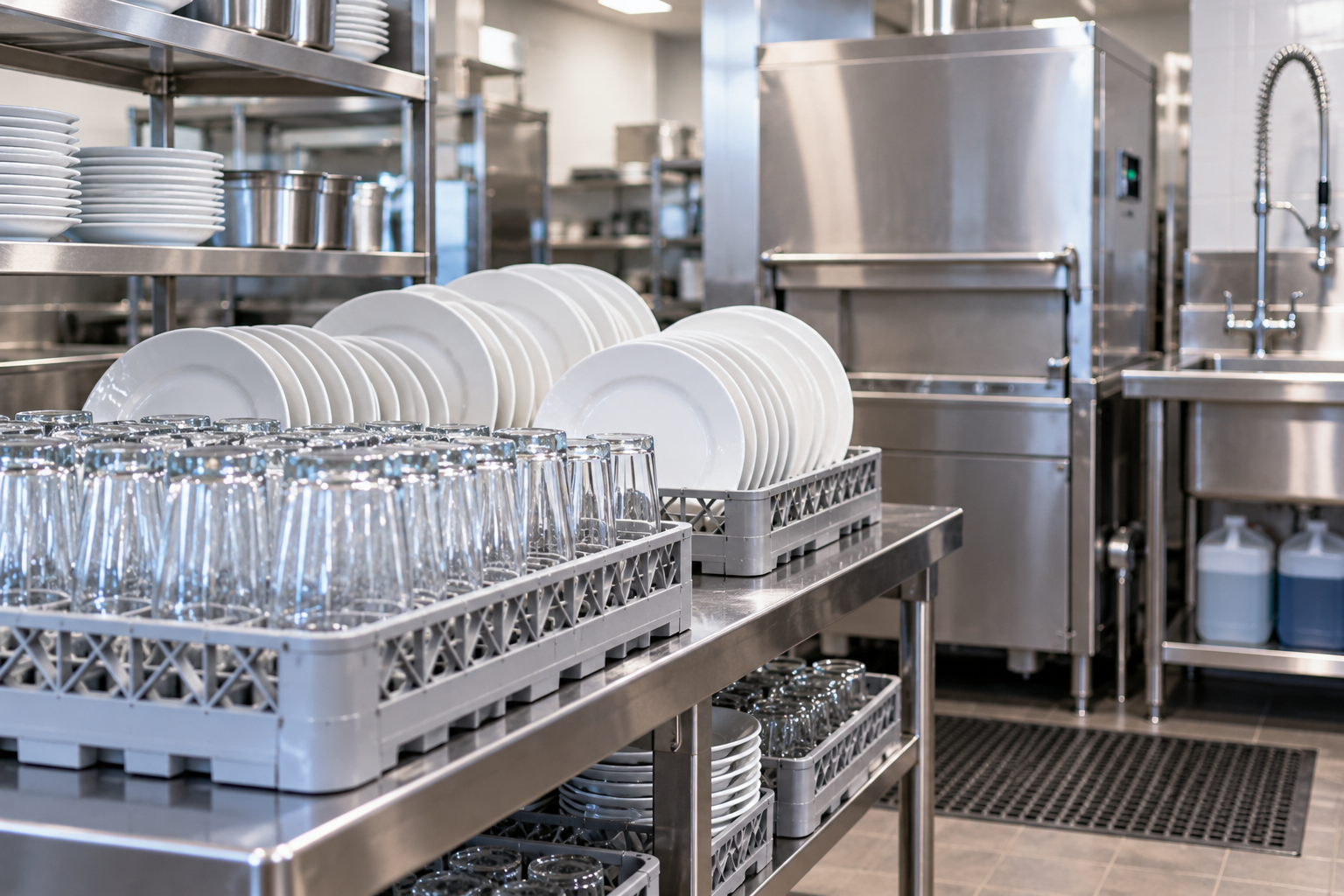
A commercial dishwasher may do the heavy lifting, but the equipment itself is only one part of an effective warewashing program. The chemicals used throughout the process each have a specific job, and understanding those roles can help improve cleaning results and keep your warewashing operation running efficiently.
So, what exactly do detergent, rinse aid and sanitizer do?
Detergent: Start with the Clean
Detergent does the cleaning. It helps remove food soils, grease and residue from dishes, glasses and flatware during the wash cycle.
Commercial warewashing detergents are designed to perform under demanding conditions, including varying water conditions and temperatures. Using the right detergent at the proper concentration helps support consistent cleaning results while reducing the chance of soils being left behind.
Simply put, if the surface isn’t properly cleaned first, the steps that follow can’t do their jobs as effectively.
Rinse Aid: More Than Just a Final Rinse
Have you ever pulled clean glasses from a commercial dishwasher only to find water spots left behind?
That’s where rinse aid comes in.
Rinse aids help water sheet off dishes and glassware rather than remaining behind as individual droplets. This can help reduce drying time and minimize water spotting, leaving dishes and glassware with a cleaner-looking finish.
It’s a small step in the warewashing process that can make a noticeable difference in the final result.
Sanitizer: The Step Beyond Cleaning
Cleaning and sanitizing are not the same thing.
While detergent removes food soils and residue, sanitizing is a separate step used to reduce microorganisms to appropriate levels.
Depending on the type of commercial dishwasher, sanitizing may be accomplished through high-temperature water or an approved chemical sanitizer. When chemical sanitizing is used, maintaining the proper concentration is an important part of the process.
The key takeaway is simple: clean first, sanitize second. Each step has a different purpose, and both are important to an effective warewashing program.
The Right Chemistry Is Only Part of the Equation
Even the right chemicals need to be used correctly. Proper dispensing, water temperature, equipment performance, employee procedures and routine maintenance can all influence warewashing results.
When something isn’t working properly, the signs may be easy to spot: food residue, cloudy glassware, water spots or dishes that aren’t drying as expected. Understanding the role each part of the process plays can make it easier to identify where the problem may be.
Building a Better Warewashing Program
Successful warewashing isn’t about one product or one step. It’s about making sure the equipment, chemistry and service work together.
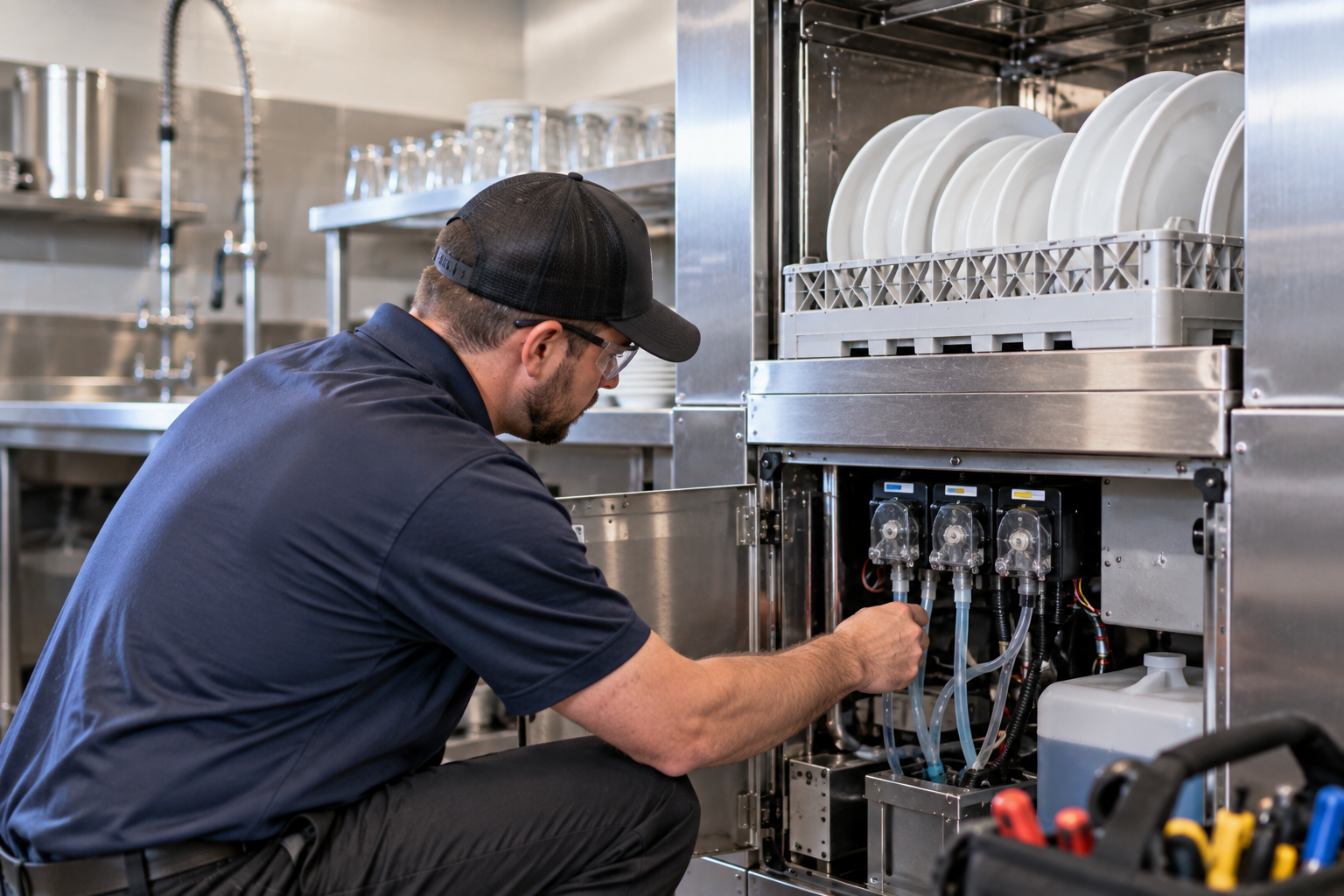
DeVere’s warewashing program provides commercial warewashing chemicals, equipment and service to help facilities maintain consistent results. Our trained service technicians provide installation, scheduled maintenance and support to help keep warewashing systems operating properly.
Whether you’re looking to improve your current warewashing process or explore equipment and service options, DeVere can help you find a program that fits your facility.
Questions about your warewashing program? Contact DeVere at 1-800-833-8373 or visit DeVereChemical.com.