
The Magic Glove Theory: Why Gloves Alone Aren’t Enough
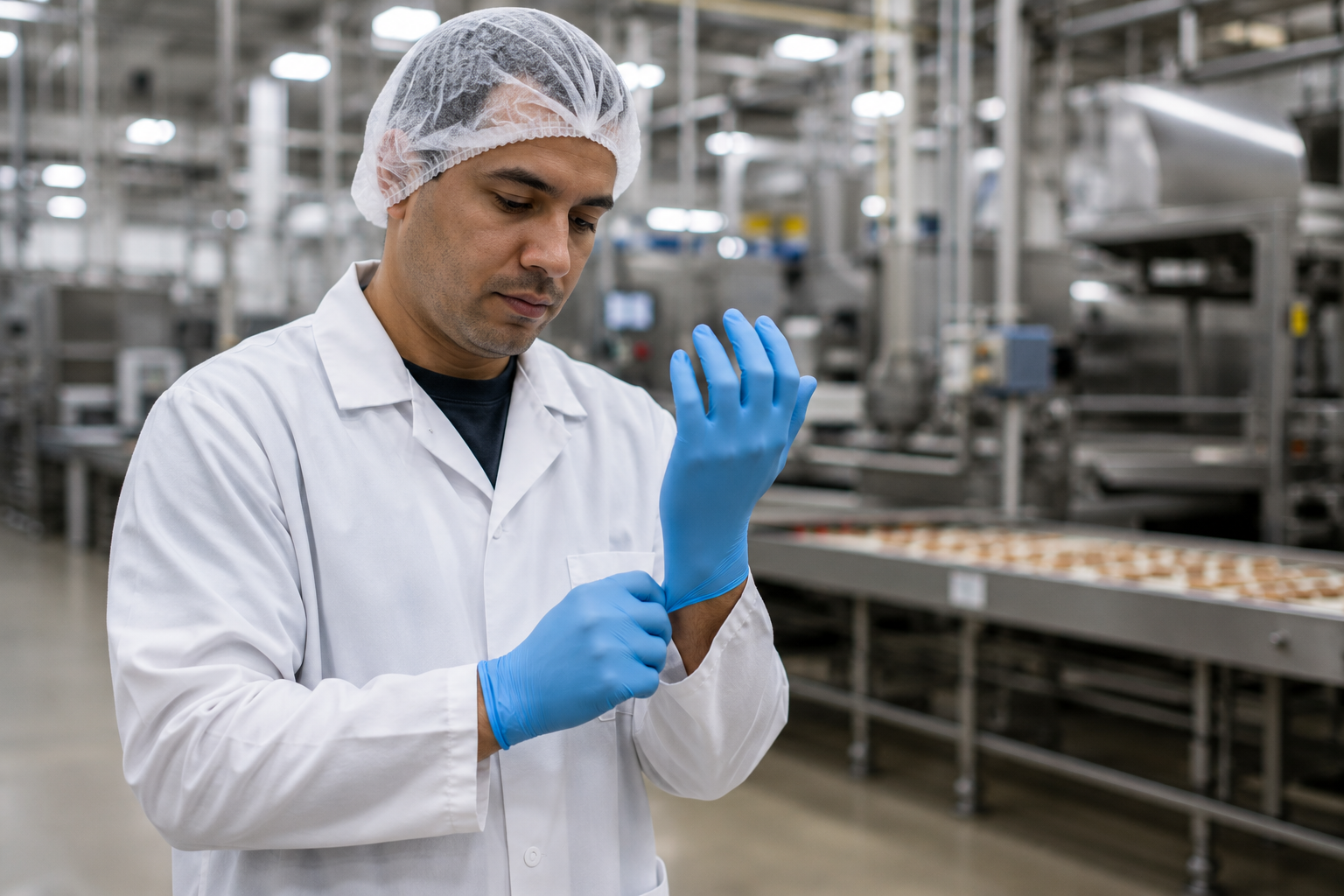
When it comes to food safety, gloves are often viewed as the first line of defense against contamination. Many employees believe that simply putting on a pair of gloves automatically prevents the spread of bacteria and other contaminants. We call this the “Magic Glove Theory,” the idea that gloves somehow eliminate food safety risks on their own.
In reality, gloves are only effective when they are used properly and changed regularly.
In many food facilities, cross-contamination occurs not because gloves aren’t being worn, but because they aren’t being changed often enough.
Understanding when to wear gloves, when to change them, and when not to wear them can help reduce contamination risks and support a safer food environment.
Gloves Do Not Replace Handwashing
One of the most common misconceptions in food service is that gloves eliminate the need for handwashing.
Employees should always wash their hands:
- Before putting on gloves
- After removing gloves
- After using the restroom
- After eating, drinking, or touching their face
- Any time contamination may have occurred
Dirty hands inside clean gloves can still lead to contamination.
How Cross Contamination Happens
Cross-contamination occurs when bacteria, allergens, or other contaminants are transferred from one surface, product, or area to another.
For example:
- Handling raw chicken and then touching ready-to-eat foods
- Touching a trash can and returning to food preparation
- Moving from the restroom to the kitchen without changing gloves
- Handling cleaning chemicals and then food-contact surfaces
Gloves can quickly become contaminated if they are not changed appropriately.
When Should Gloves Be Changed?
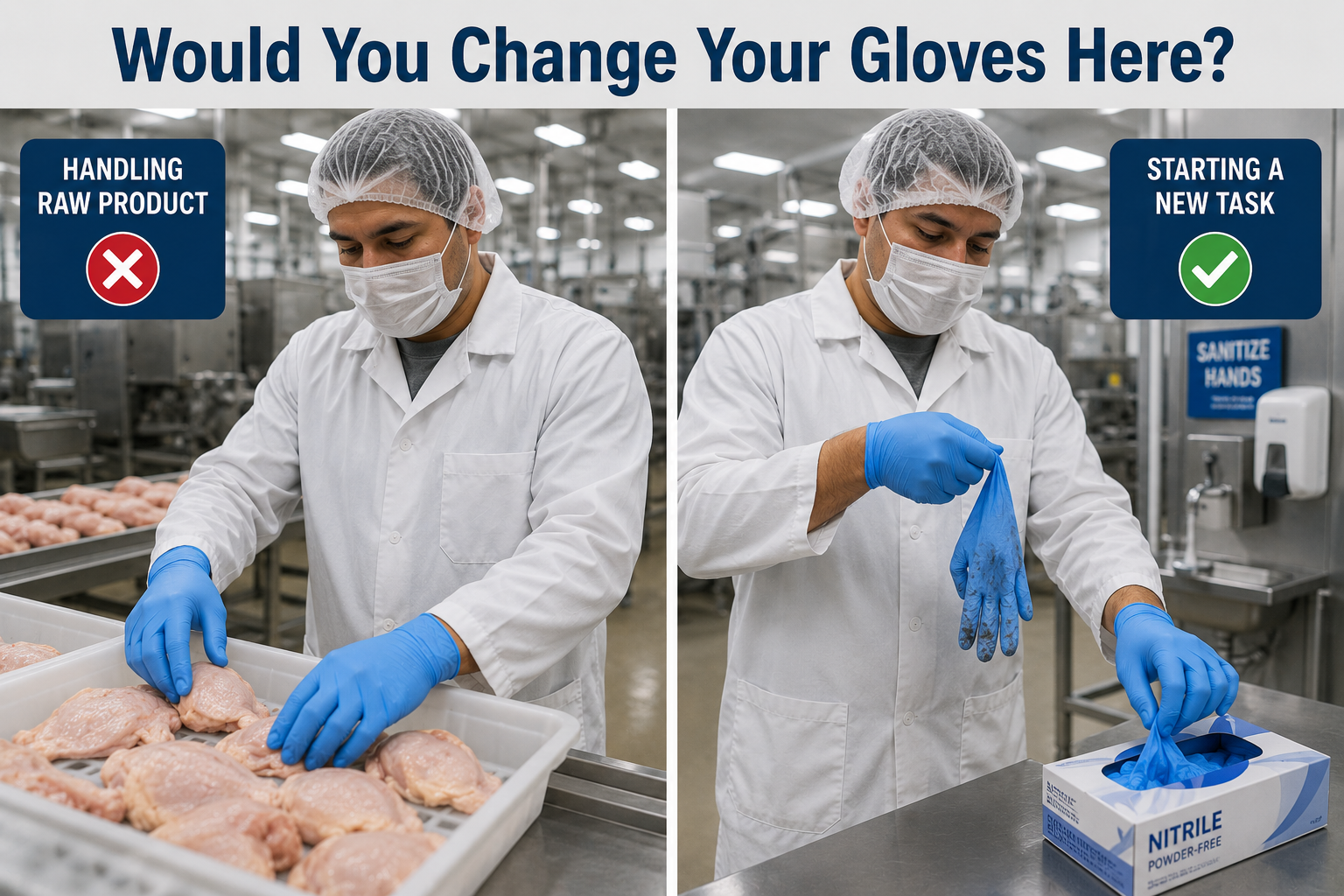
Gloves should be changed anytime an employee:
- Switches between raw and ready-to-eat foods
- Moves from one workstation to another
- Handles trash or cleaning supplies
- Touches their face, phone, or personal items
- Leaves and returns to a food prep area
- Tears or damages a glove
- Completes a task and begins a new one
A good rule of thumb is simple: if you would wash your hands, you should likely change your gloves.
When Gloves Should Not Be Worn
There are situations where wearing the same gloves continuously can actually create more risk.
Employees should avoid:
- Wearing the same gloves throughout an entire shift
- Touching multiple surfaces with the same pair of gloves
- Using gloves as a substitute for handwashing
- Assuming gloves remain clean simply because they look clean
Gloves should be viewed as a single-task tool, not permanent protection.
Create a Culture of Food Safety
Proper glove use is not just a policy. It is part of a larger food safety culture.
Regular training helps employees understand:
- When to change gloves
- Proper handwashing procedures
- Cross-contamination risks
- Safe food handling practices
When teams understand the “why” behind these procedures, compliance becomes much more consistent.
The Bottom Line
The Magic Glove Theory can create a false sense of security. Gloves are an important part of food safety, but only when they are used correctly. Without proper glove-changing procedures and hand hygiene, cross-contamination can still occur and put food safety at risk.
By training employees, reinforcing best practices, and maintaining strong sanitation programs, facilities can help create a safer environment for both employees and customers.
At DeVere Chemical, we’re committed to helping facilities build smarter sanitation programs that support food safety, compliance, and confidence every day!